
FLOOR SCREED CONTRACTORS NOTTINGHAM
Liquid Screed Floor Levelling Services across Nottingham

Professional Floor Screeding Services in Nottingham
Floor screeding creates the essential foundation for any successful flooring installation. Whether you're planning laminate flooring, luxury vinyl tiles, or porcelain floor tiles, a perfectly level screed surface prevents the problems that plague poorly prepared floors: cracked tiles, lifting boards, uneven surfaces, and premature floor failure.
At Flooring Nottingham, we provide professional floor screeding services across Nottingham, West Bridgford, Beeston, Long Eaton, and surrounding areas. We specialise in both liquid self-levelling screed and traditional sand-cement screed, offering the complete service from substrate preparation through to your final floor installation. As floor screeding specialists who also fit the finished floor, we ensure every substrate meets the exact specifications your chosen flooring requires.
Why Floor Screeding Matters for Your Project
A level floor isn't just aesthetically important; it's structurally critical. When rigid flooring materials like wood flooring, laminate, or tiles are installed over an uneven substrate, even minor imperfections create serious problems. A seemingly small hump in the subfloor acts as a fulcrum beneath a floor plank, creating a seesaw effect that causes boards to lift, rock underfoot, or eventually crack under repeated stress.
For tiled floors, whilst tile adhesive can accommodate very minor variations, significant unevenness leads to lippage between tiles, cracked grout lines, and ultimately cracked tiles as the substrate flexes. Flexible floor coverings like vinyl sheet flooring and carpets are more forgiving, but even these will telegraph pronounced divots and lumps through the surface, creating an unprofessional finish.
Professional floor screeding eliminates these risks entirely. A properly screeded floor provides the stable, level platform that allows your chosen flooring to perform as designed, look its best, and deliver the decades of service life you expect from a quality floor installation.
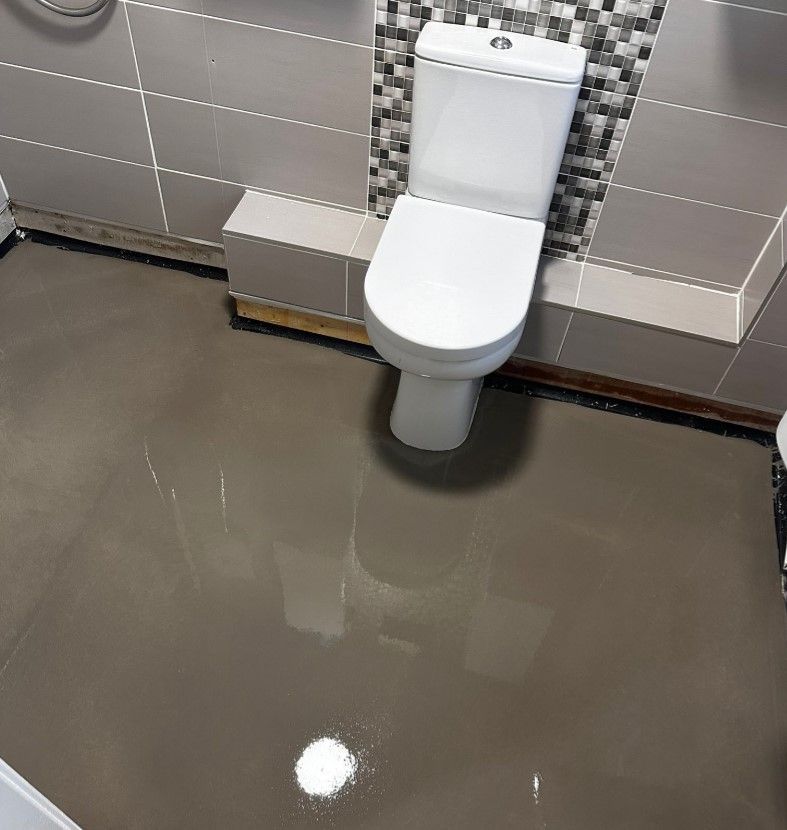
Floor Screeding near me
Looking for floor screeding near me in Nottingham?
If so, simply get in touch today to arrange a quote
Our Floor Screeding Methods
We offer two primary screeding solutions, each selected based on your project requirements, the flooring you're installing, and the specific characteristics of your property.
Liquid Self-Levelling Screed
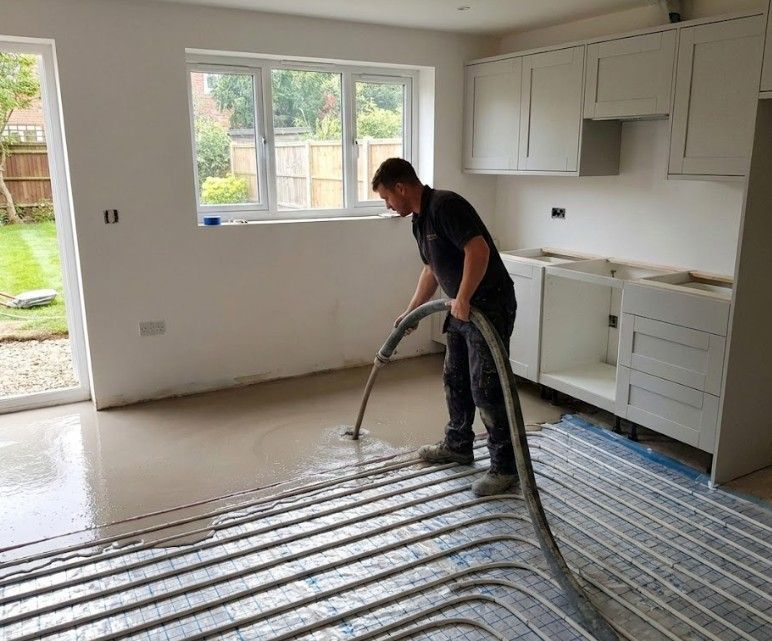
Liquid screed has become our preferred method for most domestic and commercial flooring projects due to its exceptional levelling properties and efficiency. This flowing screed is pumped onto the prepared substrate where it naturally seeks its own level, eliminating the manual levelling work required with traditional methods.
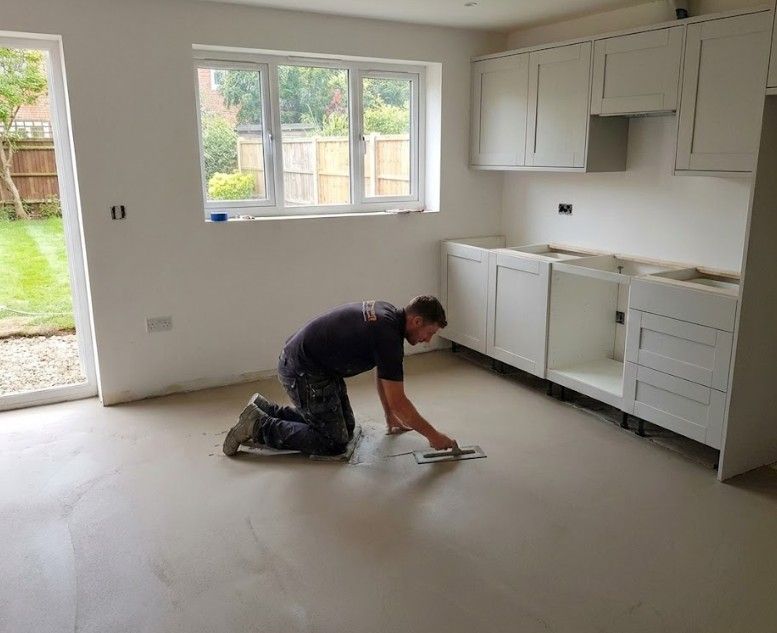
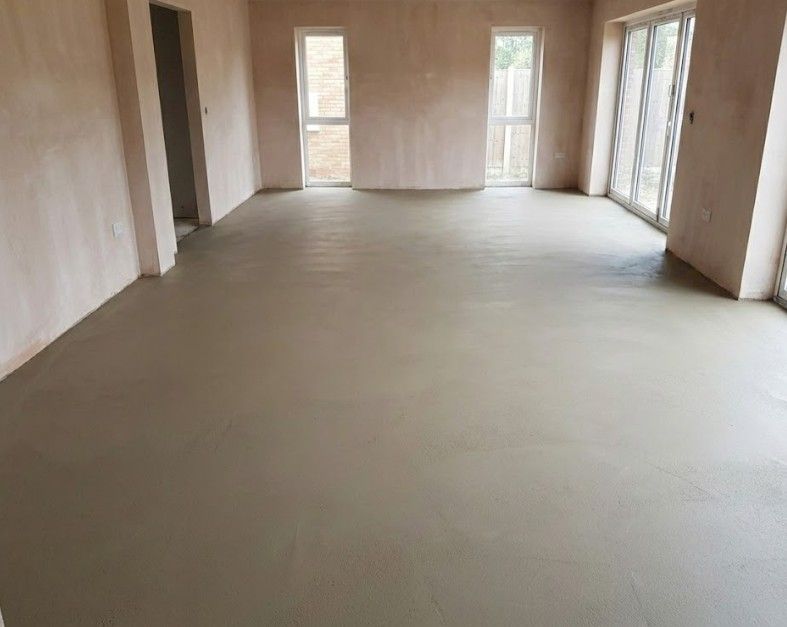
The self-levelling nature of liquid screed means we can achieve perfectly flat surfaces across entire rooms, even where the original subfloor had significant slopes or dips. If we identify a slope running from one side of your room to the other, the liquid screed builds up the lower areas automatically until the entire floor reaches a uniform level plane. For rooms where ceiling height permits, we may apply a thin layer across the entire floor area to guarantee absolutely consistent substrate conditions throughout, which produces the best possible results when we fit your wooden flooring or tiles afterwards.
Liquid screed is particularly beneficial for properties with underfloor heating installations. The flowing nature allows it to completely encapsulate heating pipes without air gaps, maximising heat transfer efficiency whilst protecting the system. It's also ideal for larger open-plan areas where traditional screeding would require numerous bay divisions and lengthy manual levelling work.
Traditional Sand and Cement Screed
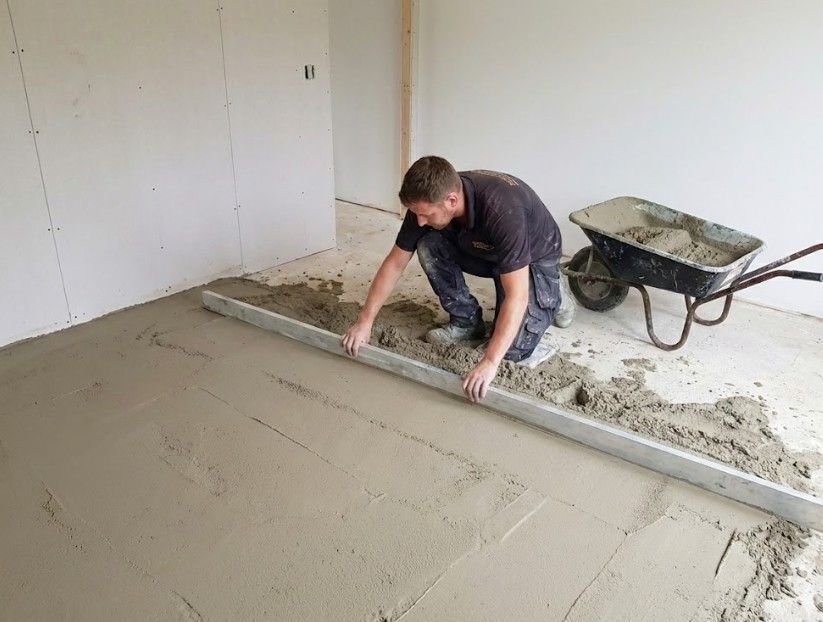
Traditional sand and cement screed remains a proven solution for many projects, particularly smaller areas, extensions, and situations where the specific working characteristics of a hand-laid screed offer advantages. This method involves mixing sand and cement (typically at a 4:1 ratio) to create a semi-dry mix that our experienced team lays and levels manually.
Whilst traditional screed requires more labour-intensive application compared to pumped liquid screed, it offers excellent compressive strength and durability. It's often the preferred choice for garage floors, workshops, and utility areas where robustness matters more than the ultra-smooth finish required beneath premium flooring. Traditional screed also performs well in smaller rooms where setting up pumping equipment for liquid screed wouldn't be practical or cost-effective.
Choosing the Right Screed for Your Project
Several factors influence which screeding method we recommend for your Nottingham property. The size of the area plays a significant role – liquid screed becomes increasingly advantageous for rooms over 20 square metres where its speed and self-levelling properties deliver substantial time savings. For smaller areas like bathrooms or individual rooms, traditional screed may prove more practical.
Your chosen floor finish matters too. If you're installing floor tiles or LVT flooring that demand an exceptionally flat surface, liquid screed's superior levelling tolerance makes it the natural choice. The presence of underfloor heating almost always calls for liquid screed due to its ability to fully encapsulate pipes without voids.
Access to the working area also influences our recommendation. Liquid screed requires space for the pump truck and hoses to reach the working area, whilst traditional screed can be mixed and transported in more confined situations. We assess all these factors during our site survey to recommend the screeding method that delivers the best results for your specific project.
floor screeding nottingham
If you're looking for floor levelling or a floor screeding service Flooring Nottingham provide this.
What's really good is that we can then fit the floor finish of your choice on top of your level floor too!
The Floor Screeding Process
Successful floor screeding begins well before any screed material touches your floor. Our systematic approach ensures every screeded floor we install in Nottingham meets the exacting standards required for long-term performance.
Pre-Screeding Preparation
The substrate preparation phase determines whether your screed will bond properly and perform reliably for decades. We start by thoroughly assessing your existing floor structure. Concrete floors must be cleaned of dust, loose material, and any contaminants that would prevent proper adhesion. We typically apply a PVA bonding agent or specialist primer to seal porous concrete and create the ideal surface for screed adhesion.
Where we're screeding over insulation boards – common with underfloor heating systems – we verify that boards are laid flat, stable underfoot, and won't flex when walked upon. Any movement in the substrate will telegraph through to the screed above. For larger screeding areas, we lay a polythene damp-proof membrane to prevent moisture migration from the substrate affecting the screed curing process.
Application and Levelling
For liquid screed installations across larger areas, premixed screed arrives on site in a mixer truck. We pump it through wide-bore hoses directly to the working area, positioning the hose end methodically to ensure complete coverage. The flowing nature of liquid screed means it begins self-levelling immediately, but we don't simply leave it to its own devices.
Once the screed is poured, we work through it with dappling bars – specialist tools that agitate the material to release trapped air pockets and encourage even spreading. This agitation is crucial; without it, air voids can remain beneath the surface, creating weak spots that may later cause problems. For traditional sand-cement screed, our team uses screeding boards and laser levels to achieve the precise flat surface required.
Curing Time and Environmental Conditions
Screed curing times depend heavily on ambient conditions, screed type, and thickness. Temperature and humidity significantly influence the drying process. We avoid screeding work when temperatures drop below 5°C or exceed 25°C, as these extremes interfere with proper curing. Cold conditions slow the curing process excessively, whilst excessive heat causes the surface to dry too rapidly, potentially leading to surface cracking before the deeper layers have properly set.
Under typical conditions with temperatures around 20°C and moderate humidity, screeded floors become walkable within 48 hours of application. However, walkable doesn't mean ready for flooring installation. We recommend allowing at least 72 hours before commencing floor fitting work, particularly for tiled floors where tile adhesive requires a fully cured, stable substrate. For thicker screed depths or when working in cooler months, drying times extend accordingly, and we'll advise on realistic timescales during your consultation.
Floor Screeding Across Nottingham and Surrounding Areas
Flooring Nottingham provides professional floor screeding services throughout Nottingham, including West Bridgford, Beeston, Hucknall, Arnold, Long Eaton, Carlton, Gedling, Netherfield, Ruddington, Stapleford, Eastwood, and Underwood. Our complete service covers everything from initial substrate assessment and screeding through to your final floor installation, whether that's commercial flooring, bathroom flooring, or any of our residential flooring options.
By handling both the screeding and floor fitting in-house, we eliminate the coordination headaches and finger-pointing that occur when multiple contractors are involved. You work with one trusted team throughout, backed by a single comprehensive guarantee covering both the substrate preparation and finished floor installation.
Contact Flooring Nottingham on 0115 647 7207 to arrange a site assessment and no-obligation quote for your floor screeding project.